
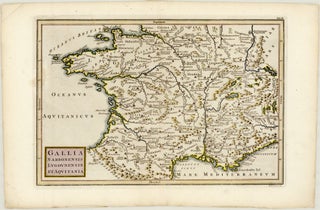
Richard William SEALE

1703 - 1762

Richard William Seale was an English mapmaker and engraver born in 1703 and active in London until his death in 1762. He was raised in a family connected to the book and print trade, gaining entry to the Stationers’ Company in 1740 by patrimony through his father, Richard Seale, who was already a member.

Operating predominantly from London, Seale established himself as a highly prolific engraver, collaborating heavily with many of the leading English cartographers of the mid-18th century. He is recognised for his technical proficiency in copperplate engraving, producing crisp geographical details and ornate decorative title cartouches that exemplified the aesthetics of European Enlightenment mapping. His notable contributions include his engraving work for John and Paul Knapton’s Geographia Antiqua et Nova (1742), Nicholas Tindal’s Continuation of Mr. Rapin’s History of England (1744-1747), and John Hinton’s The Universal Magazine of Knowledge and Pleasure (1747-1766).

Richard William Seale will be remembered as a technically skilled and dependable craftsman whose extensive engraving work brought the geographic visions of major 18th-century English cartographers to physical fruition.