Hendrik DE LETH
1703 - 1766
Hendrik de Leth was born in Amsterdam on May 13, 1703, and died there on June 17, 1766. He was born into a family of artisans and printmakers, studying and working under his father, Andries de Leth (1662-1731), who was an established plate cutter and bookseller. Through his father, Hendrik’s lineage connected to the celebrated Visscher cartographic dynasty – Andries had apprenticed with the prominent cartographer Nicolaas Visscher II and eventually took over the Visscher map, print, and art dealership, “In de Visser,” in Amsterdam. Hendrik joined the booksellers' guild in 1728 and fully took over the family business following his father’s death in 1731.
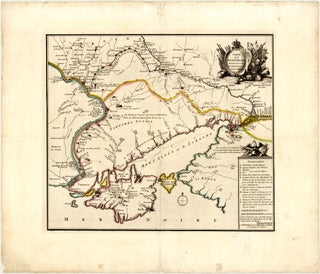
Operating as an engraver, etcher, publisher, and art dealer, De Leth contributed to the late period of the Dutch Golden Age of cartography. He is recognised for his skill in copper engraving, which he applied to regional atlases, landscape books, and large-scale maritime and colonial maps. A defining aspect of his business model involved the acquisition and subsequent transfer of printing plates. His firm utilised the inherited stock of the Visscher family, and later in his career, de Leth engraved the General Map of the Colony or Province of Suriname (c. 1758) based on the designs of Alexander de Lavaux. Following his death, his own copper plates were acquired by other publishers, including Jan Meyer and S.J. Baalde, who continued printing his works. His core cartographic and topographical publications include Het Zegepralent Kennemerland (c. 1732), a work containing 100 topographical engravings, and his popular travel atlas, the Nieuwe Geographische Atlas en Historische Atlas Van de Zeven Vereengde Nederlandsche Provintien (1740).
Hendrik de Leth is remembered as a versatile 18th-century Dutch craftsman who sustained the classical traditions of Amsterdam's map-publishing houses through his precise engraving work and successful stewardship of inherited cartographic estates.