
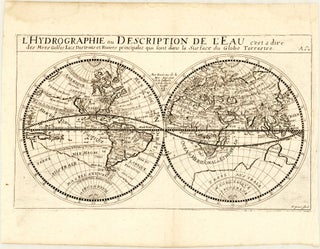
Hugues PICART

Hugues Picart (commonly credited as H. Picart) was a French engraver and printmaker, who was born in 1587 and who died in Paris in either 1662 or 1664. Not much is known about his family background and education. He is primarily known to have operated within the active printmaking and publishing networks of 17th-century Paris, carving out a specialised role as a skilled copperplate engraver.

Picart’s primary role was that of a meticulous engraver, who translated the designs of major geographers into highly detailed, printable copper plates. He collaborated extensively with leading French publishers and mapmakers of his era, notably engraving plates for the widow of Jean Le Clerc (Chez la veuve Jean Le Clerc) in the 1620s and 1630s, as well as for the prominent royal geographer and publisher Jean Boisseau between 1642 and 1648. His technical skill extended beyond purely geographic content – he also engraved intricate decorative cartouches, architectural elements, and design books for goldsmiths and jewellers. His work includes plates for regional French maps such as Carte du Grand Perche et Perche Gouet (c. 1620) and Carte du Pays de Retelois, as well as broader continental views such as Jodocus Hondius’ Africae nova tabula (published by Boisseau in 1640).

Hugues Picart is remembered as a notable figure in 17th-century French cartography, known as a dedicated artisan whose fine copperplate engraving brought the geographic visions of contemporary mapmakers to the public.