
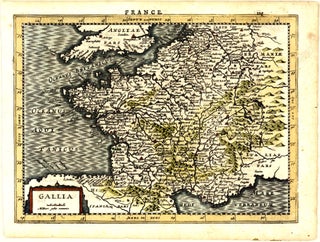
Jodocus HONDIUS II

1594 - 1629

Jodocus Hondius II (also known as Jodocus Hondius the Younger) was born in 1594, likely in Amsterdam, and died there in 1629. He was born into one of the most prominent dynasties in the history of Dutch cartography. His father was Jodocus Hondius I (“the Elder”), an eminent Flemish cartographer and engraver who established the family’s publishing house in Amsterdam and revived the work of Gerard Mercator. Raised in this environment, Hondius II was educated and trained directly within the family workshop alongside his brother, Henricus Hondius II, and his future brother-in-law, the prominent publisher Johannes Janssonius.

Following his father’s sudden death in 1612, Hondius II contributed significantly to the commercial continuity of the family firm, working initially under the direction of his mother, Colette van den Keere, before operating independently. His role in cartography focused heavily on the production and engraving of high-quality single-sheet regional maps, such as his notable depictions of Spain, China, and the East Indies. He also collaborated on the continuous expansions of the landmark Mercator-Hondius Atlas and its miniature counterpart, the Atlas Minor. A pivotal event in commercial cartographic history occurred at the time of his premature death in 1629, when his extensive stock of at least 34 copper plates was sold by his widow to Willem Janszoon Blaeu, the primary competitor of the Hondius firm. This acquisition catalysed a fierce, decades-long rivalry between the Blaeu and Janssonius-Hondius publishing houses, forcing the latter to quickly re-engrave identical plates to remain competitive.

Jodocus Hondius II will be remembered as a highly skilled engraver who preserved his father’s cartographic legacy and whose copper plates ultimately reshaped the competitive landscape of the Golden Age of Dutch mapmaking.